



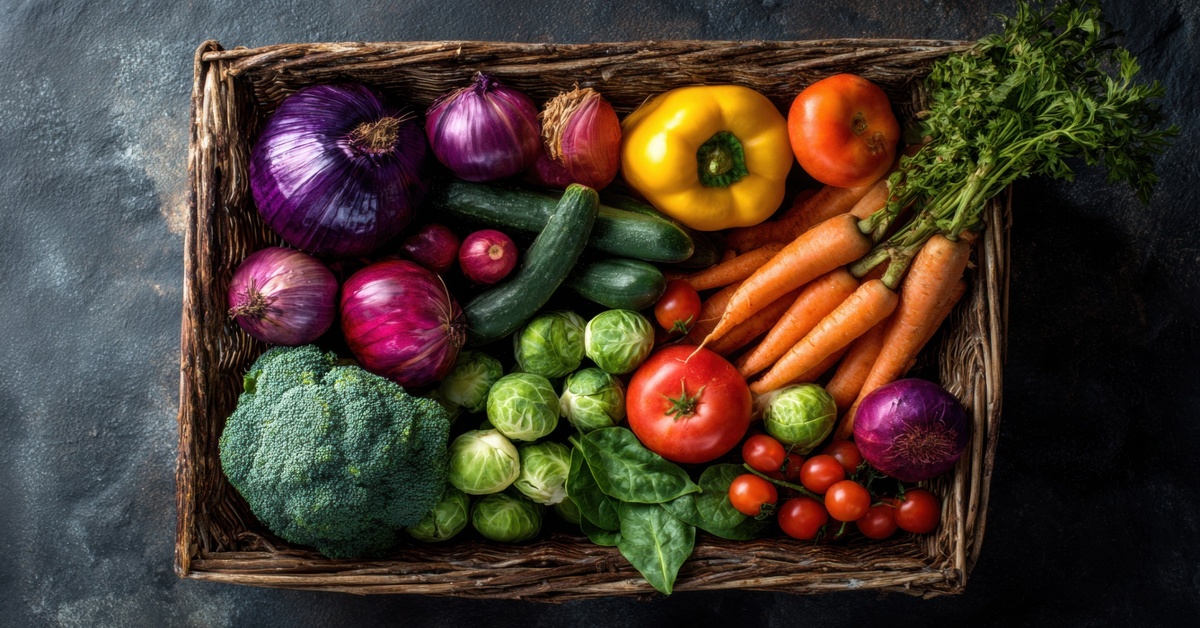
Although now common, Plant Breeder’s Rights are used to protect new vegetable varieties, and the Seed Gazette enables marketing
The Main Types of Intellectual Property
Patents, Trade Marks, Registered Design (also called Design Patents), and Copyright are now all well-known forms of Intellectual Property. Perhaps less well-known are Plant Breeder’s Rights. A common question is: “how do I protect a new and innovative plant variety?”. This is often followed up with: “And what do I then need to do to allow it to be marketed?”. This article gives a brief overview of Plant Breeder’s Rights (PBR), what they are, how to use them, the criteria that must be met, and then how you go about putting your new plant or vegetable variety onto the market.
Cabbage: A Brief History Of The Modern Vegetable
When you do your weekly shop and fill your basket with familiar staples – peppers, tomatoes, lettuce, carrots and cabbage – it’s easy to overlook the extraordinary amount of work that has gone into producing these vegetables.
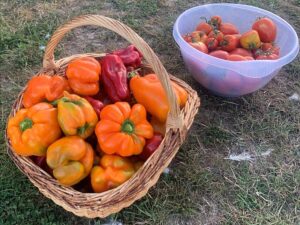
Peppers and tomatoes grown from commercial seeds. These vegetables are typically listed in the Seeds Gazette prior to being sold
Beyond the physical labour involved in farming, these vegetables represent decades of research and selective breeding. Each variety stocked on your local supermarket shelf has been carefully altered.
Humans have been tinkering with plant species for millennia. Through selective breeding, we have enhanced flavour, improved resistance to disease, adapted crops to withstand specific climates and optimised them for storage and transport. Behind every “ordinary” vegetable lies a vast body of agricultural and genetic knowledge.
Few crops demonstrate this process better than the humble cabbage. The wild ancestor of the cabbage, Brassica oleracea, originated in the eastern Mediterranean. Over thousands of years, human intervention has transformed this single plant into an astonishingly diverse range of crops, with over 350 accepted genera and over 4300 accepted species derived from it. These include common vegetables such as cabbage, Brussels sprouts, kohlrabi, broccoli, and cauliflower. All of these familiar vegetables share the same origin yet display markedly different physical and nutritional characteristics. The question is, do they count as separate vegetables for your 5-a-day?
B.oleracea also serves as the origin for crops of major economic importance. Oilseed rape (B. napus) for example, is the product of natural interspecific hybridisation between wild cabbage (B. oleracea) and turnip (B. rapa). From this hybrid, humans have developed seed varieties which provide edible oils, animal feed and biofuel components critical for the agricultural economy. Yet the wild ancestor would be, by many people, dismissed as a common weed if found on the side of the road.
How Science Is Used To Develop New Plant Varieties
But plant breeding hasn’t stopped there. The industry continues to develop new plant varieties, now with more help from science. Along with selective breeding, newer technologies such as precision breeding, and genomic editing have enabled us to develop new varieties, tackling issues such as climate change and dealing with pest pressure with fewer chemical inputs.
What Are Plant Breeder’s Rights And The Seeds Gazette?
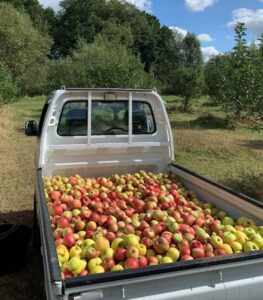
These apples are not protected under any PBRs as all trees in this orchard are from old English varieties predating the IP protections in place today.
In the UK, this investment in developing new plant varieties can be protected through Plant Breeder’s Rights (PBRs). These rights provide a form of intellectual property protection for those who developed a new plant variety.
Separately, or alongside applying for a PBR, an applicant can also apply to add a new plant variety to the UK national listings, which permits the variety to be marketed in the UK. For example, in August 2025, 632 new lettuce varieties were added to the list in the special edition of the Seeds Gazette, granting them eligibility for sale in the UK market.
How To Qualify For Protection Under Plant Breeder’s Rights
Applications for PBRs are made to the Plant Variety Rights Office (PVRO) and to qualify they must be:
- Distinct: Have at least one important characteristic that is different from other varieties.
- Uniform: Individual plants in the variety share the important characteristic.
- Stable: The variety remains unchanged after repeated propagation.
Certain time limits also apply. You cannot get protection if the variety has been sold or used commercially in the UK more than 1 year before the application date (or 4 years outside the UK, extended to 6 years for trees and vines). Genetically modified varieties are also eligible for protection in the UK, provided the appropriate consent has been obtained.
What Protection Do Plant Breeder’s Rights Give And How Long Does It Last?
Once accepted, PBRs grant you the ability to prohibit others from using your variety for:
- Production or reproduction.
- Sale or offering for sale.
- Altering so it can be propagated.
- Exporting or importing.
- Keeping stock of your plant species.
This protection lasts for a period of 25 years (extended for 30 years for trees, vines, and potato varieties), providing robust protection for your newly developed plant variety. Maybe its time for another variety of cabbage?
To learn more about how Albright IP can help you secure, protect, and commercialise your plant varieties and ideas, contact via email, by telephone: +44 (0) 1242 691 801, or using the Contact Us form below and they will be happy to advise and guide you.
Author